


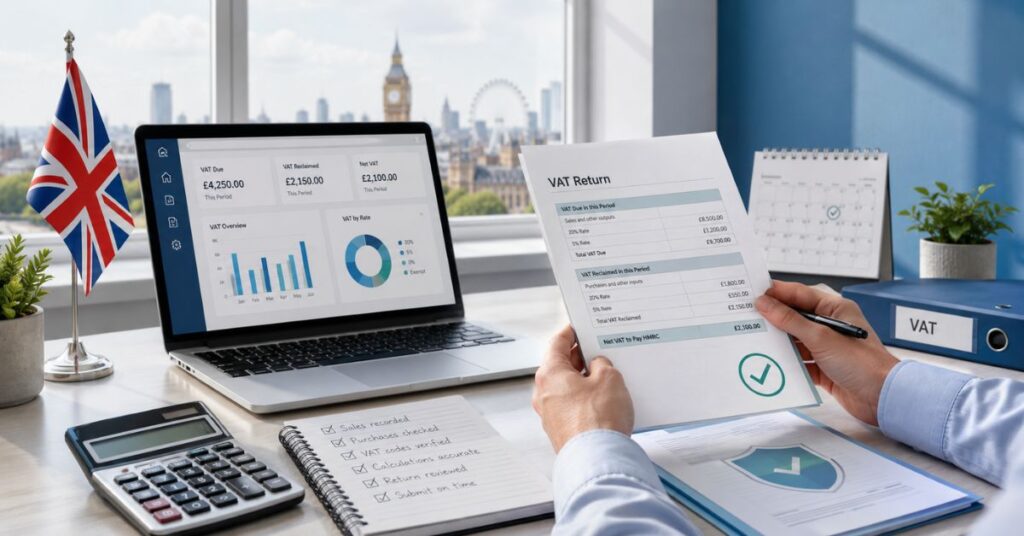
VAT feels routine. The quarter comes round, you pull the figures, file the return, pay the bill. Most of the time nothing happens. The trouble is that HMRC doesn’t grade you on the quarters that went fine. It reacts to the ones that didn’t and it does so automatically. A return filed a few days late or a figure that’s quietly wrong, can sit unnoticed until a penalty notice lands. By then you’re not only paying the tax, you’re paying for the mistake on top of it.
Getting VAT right isn’t about being clever. It’s about being consistent in a system that now checks your numbers whether or not anyone is looking.
What HMRC sees when your return arrives
Since Making Tax Digital became mandatory, VAT returns flow into HMRC through compatible software and the data lands in a system that compares it against your own history and against information from other sources. If your turnover jumps or drops with no obvious reason, if your reclaimed VAT looks high for your trade, or if your figures don’t line up with what a supplier or customer has reported, the return gets flagged.
No inspector needs to be suspicious for any of this to happen. The software does the first pass. That’s why accurate submission matters so much now: the numbers are being checked the moment they arrive, not just when someone decides to open an enquiry.
The penalties that catch businesses out
In January 2023, HMRC scrapped the old default surcharge and brought in a points-based system. The change caught out a lot of business owners who assumed the rules worked the way they always had.
Late submission points
Every time you miss a filing deadline, you pick up a penalty point. Reach the threshold for your filing frequency and you’re charged £200. The threshold is four points for quarterly returns, five for monthly and two for annual. Once you’re at the threshold, every further late return costs another £200 and the points don’t clear quickly. You have to file on time for a sustained run before they drop off.
File late once and nothing much happens. Drift into a habit of filing late and the £200 charges start repeating.
Late payment penalties and interest
Paying late is treated separately from filing late, which surprises people. If you leave the bill unpaid past the early grace window, a first penalty applies to what’s still owed. Let it run longer and a second, time-based penalty builds on top of that. Interest also runs alongside the whole time, tracked to the Bank of England base rate plus a margin.
HMRC increased these rates in 2025, so paying late now costs more than many businesses remember it costing. The exact percentages change periodically, so it’s worth checking the current figures rather than relying on what was true a couple of years ago.
Penalties for inaccurate figures
A wrong number is judged on your behaviour, not just the error itself. A genuine mistake you couldn’t reasonably have avoided may carry no penalty at all. A careless one does. A deliberate error, or one you tried to conceal, sits at the top of the scale. Two things move the figure up or down: how large the error was and whether you told HMRC before they found it themselves.
Where VAT returns usually go wrong
Most penalties have nothing to do with fraud or anything dramatic. They come from ordinary slips that quietly repeat quarter after quarter. The common ones:
- Reclaiming VAT services on costs you can’t, such as client entertainment or the private portion of a mixed-use expense.
- Applying the wrong rate to items that are zero-rated, reduced-rated or exempt, which trips up a lot of food, construction and property businesses.
- Claiming input tax with no valid VAT invoice to support it.
- Mishandling the reverse charge, especially in construction or on services bought from overseas suppliers.
- Filing figures that don’t reconcile to the bookkeeping, because the two were never checked against each other in the first place.
What “accurate” actually means here
Accuracy isn’t just arithmetic. A return can add up perfectly and still be wrong if the VAT treatment behind it is off. Getting it right means three things working together: transactions coded correctly as they happen, a return that reconciles to your records and a clear digital trail from every figure back to the underlying invoices.
That trail is an MTD requirement, not a nice-to-have. If HMRC asks how you arrived at a number, “that’s what the software said” won’t do. You need to be able to show the working behind it.
What you gain beyond staying out of trouble
Avoiding penalties is the obvious reason to get this right. It isn’t the only one.
Returns that reconcile cleanly give you a true picture of what you actually owe, so VAT stops being a quarterly shock that drains the bank account at the worst moment. A steady, accurate filing record also marks you out as low-risk to HMRC, which makes an inspection less likely and far less stressful if one ever does come. And if you sell the business or go looking for finance, your VAT history is one of the first things a buyer or lender will pick through.
Building a process that holds up
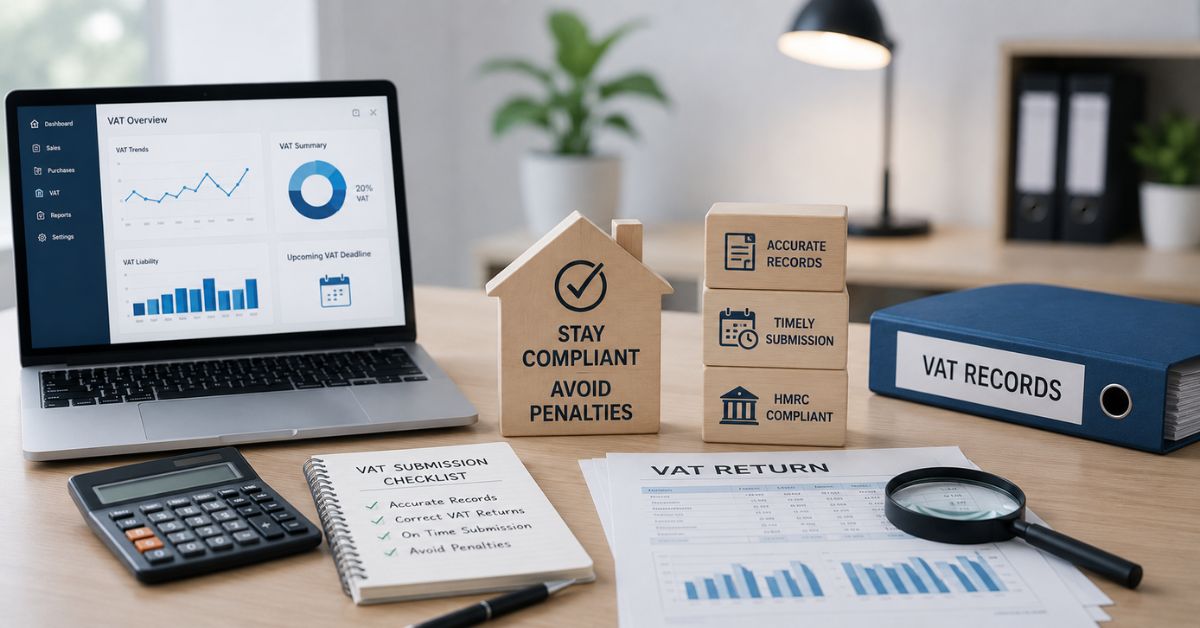
The businesses that rarely get penalised aren’t the ones with the most sophisticated systems. They’re usually the ones with dull, repeatable habits:
- Reconcile VAT monthly instead of scrambling at quarter end.
- Keep your digital records as you go, not in a panic before the deadline.
- Pull out unusual or one-off transactions for a proper look before they’re filed.
- Note the filing date and the payment date separately in the diary, because they’re easy to conflate.
- Get a second pair of eyes on anything you’re unsure about before you submit, not after the penalty arrives.
The bottom line
VAT penalties are nearly always avoidable, which is exactly what makes them so frustrating when they land. HMRC isn’t trying to trip you up with the points system. It’s rewarding consistency and charging for the lack of it. Get the treatment right, reconcile before you file, pay on time and the penalty regime barely touches you.
With the 2025 rate rises, the cost of getting VAT wrong has gone up, while the cost of getting it right has stayed roughly where it was: a bit of discipline, decent records and the right advice when the VAT itself gets genuinely complicated. If your returns have started to feel like a quarterly guess, that’s usually the moment to tighten the process yourself, before HMRC does it for you.
If VAT has become more headache than it’s worth, a good accountant can take the filing, the reconciliation and the deadline-watching off your plate entirely, so the question of penalties stops coming up at all.
Frequently asked questions
How long do I have to submit and pay my VAT return?
For most businesses on quarterly returns, both the return and the payment are due one calendar month and seven days after the end of the VAT period. Your exact deadline is shown in your HMRC online account.
What happens the first time I file a VAT return late?
Under the points system, a single late return usually just adds one penalty point rather than a fine. The £200 penalty only applies once you hit the points threshold for your filing frequency, so an occasional slip is treated very differently from a pattern of late filing.
Can I correct a VAT mistake without telling HMRC?
Small errors below the reporting threshold (broadly the greater of £10,000 or 1% of your box 6 turnover up to a £50,000 cap) can be adjusted on your next return. Anything above that has to be reported to HMRC separately.
Will I be penalised for an honest mistake?
Not automatically. If you took reasonable care and the error was genuine, HMRC may charge no penalty. Penalties bite where the mistake was careless or deliberate and telling HMRC before they find it usually reduces the charge.
Does Making Tax Digital make penalties more likely?
Not on its own, but it removes the easy excuses. Because returns are filed digitally and checked automatically, both errors and late submissions are easier for HMRC to catch, which means an accurate, well-kept process matters more than it did under the old paper-friendly regime.