

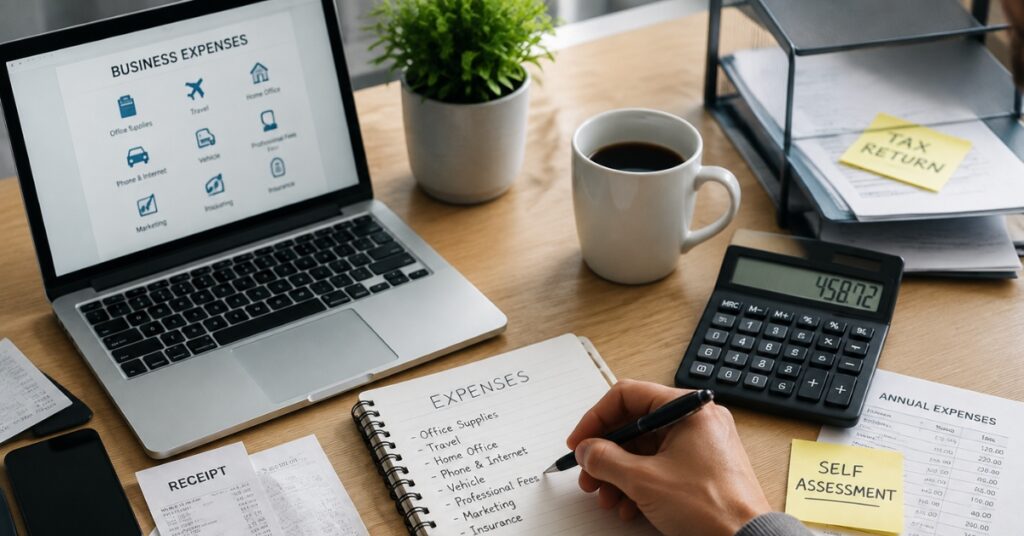
Filing a Self Assessment tax return can feel daunting, but knowing what expenses you’re allowed to claim is key to cutting your tax bill and staying HMRC-compliant. Every year, many sole traders, landlords, and company directors overlook deductible costs and end up paying more tax than necessary. Claiming the right expenses reduces your taxable profit, meaning you only pay tax on what’s left. Of course, HMRC insists that deductions must be “wholly and exclusively” for business purposes. In practice, that means costs like business travel, office supplies, and professional fees but not personal bills or fines. This guide breaks down the main categories of allowable expenses, explains how to record them, and highlights common pitfalls to avoid.
Understanding the ‘Wholly and Exclusively’ Rule
HMRC’s basic rule for any expense is that it must be incurred solely for your business. If you use an item partly for personal purposes, you can only claim the business portion. For example, if you use your mobile phone 70% of the time for work, you can claim 70% of the bill. If HMRC ever checks your return, you must show proof that each expense was “wholly and exclusively” business-related. In concrete terms, this means:
- Business purpose: Costs of stock, tools, or travel to attract or fulfil business are allowable.
- No personal use: Commuting or family vacations aren’t deductible. Anything that’s not strictly work-related is disallowed.
Keeping clean records helps ensure every claim meets HMRC’s rule. As the Low Incomes Tax Reform Group explains, if HMRC inspects your return you’ll need evidence that each cost was for your business. Failing to do this can trigger penalties.
Common Business Expense Categories
UK tax rules let you claim a wide range of business costs to reduce your taxable profit. Typical allowable categories include:
- Office supplies and utilities: Stationery, printer ink, postage, and office equipment (laptops, software, small tools, etc.) are deductible. You can also claim rent, power, heating, and insurance for business premises. If you work from home, you may apportion household bills to the business (for example, a fraction of rent or utilities based on office use).
- Travel and accommodation: Costs of business trips are allowable – this includes train, bus or taxi fares, and even overnight hotel and meal costs when away on business. Similarly, fuel, parking fees, tolls and ULEZ charges for business travel are deductible. (Just note: regular “commuting” – e.g. driving to a fixed office each day – is not allowable.) For cars and vans used in the business, you can claim the business proportion of fuel, insurance, servicing, tax and repairs. Alternatively, you can use HMRC’s mileage rates (45p/mile for the first 10,000 miles, then 25p) to simplify this.
- Equipment and stock: Any equipment or machinery used in your trade (computers, tools, kitchen equipment, etc.) can be claimed. Under the cash-basis accounting rules, small assets (used <2 years) are simply expensed; larger purchases can qualify for capital allowances. Goods bought to sell on, and raw materials or components used up in making products, are also allowable costs.
- Marketing, advertising and subscriptions: Costs like website design/hosting, online or print advertising, promotional materials, and trade magazine subscriptions are deductible. Bank charges, loan interest and business insurance premiums (public liability, professional indemnity, etc.) can be claimed as expenses too. Fees paid to accountants, lawyers or consultants for the business (including tax advice) are also allowable.
- Staff and training: Wages paid to employees or payments to subcontractors count as allowable, provided they’re for genuine work and at least the minimum wage. Don’t forget your own Employer’s NICs on staff. Training course fees can be claimed if the course improves the skills you need for the business. (By contrast, you cannot claim your own “salary” or drawings from a sole trade as an expense.)
Each bullet point above covers expenses HMRC considers legitimate business costs. In short, if you buy it for the business and not the household, it’s probably allowable.
Home Office and Premises Expenses
Many small businesses operate (at least partly) from home. You can claim a reasonable portion of household costs if you have a dedicated home office space. This might be done by actually apportioning bills (e.g. 10% of gas and electricity) or by using simplified flat rates available from HMRC. In either case, only the part used for business is deductible. Likewise, rent or rates on business premises, property insurance and security can be fully claimed if these premises are used exclusively for work.
Travel and Vehicle Expenses
Business travel is broadly allowable, but personal travel isn’t. You can claim public transport fares, taxi/Uber costs, fuel for business trips, parking and even overnight accommodation and meal costs when on business. Keep a log of business journeys: it’s the best way to split costs between work and personal use. For cars/vans, either use HMRC’s flat mileage rate (45p per mile for the first 10,000 miles) or calculate actual running costs and claim the business percentage. For example, if roughly 50% of your driving is work-related, you can claim 50% of fuel, insurance and repair costs. (Note that parking fines or personal phone calls are not allowable.)
Example: A self-employed photographer who regularly drives to different photo shoot locations can claim the fuel, insurance and tax for those trips. By contrast, someone simply commuting from home to a fixed studio each day would not be allowed to deduct that travel.
Marketing, Insurance and Professional Fees
Expenses that help run or promote your business are usually deductible. Website and advertising costs (online ads, flyers, business cards) can be written off. Insurance premiums (for business risks like liability or professional indemnity) are claimable. So are bank charges, loan interest on business borrowing, and professional fees for accountants or solicitors working on the business. Essentially, if the expense is billed to the business and not for personal convenience, it typically qualifies.
Staff, Training and Pension Contributions
Any wages or subcontractor fees paid purely for business work are allowable. This includes Employer’s National Insurance contributions on those wages. Training course costs can be claimed if they directly relate to improving your work skills. You can also claim pension contributions made for the benefit of your business earnings (they reduce taxable profit). Even charity donations under Gift Aid can give extra tax relief. All of these reduce your overall tax bill via the Self Assessment return.
Expenses for Rental Income
If you have a buy-to-let property, the same “wholly and exclusively” rule applies to rental income. Allowable rental expenses include repairs and maintenance (not improvements), letting agent or management fees, buildings and contents insurance, council tax and utilities when the landlord pays them, advertising for tenants, and accountant’s fees. You can also claim vehicle costs if used for your rental business (for example, driving to a property for inspections). Importantly, only the interest element of any mortgage payment can be claimed against rental income (not the capital repayment).
Example: A landlord who pays £800 for a new boiler as a repair could deduct that cost, but if they built an extension on the property (improving it), that would be a capital cost and generally not deductible as an expense.
Non-Allowable Expenses to Watch Out For
To avoid mistakes, remember the obvious exclusions. Private or personal costs can’t be claimed – for example, your daily commute, non-specialist clothing (suits, casual wear), or parking fines. Entertainment like client lunches is not allowable. HMRC also prohibits claiming your own salary or drawings from a sole trade, and capital improvements (building additions or expensive renovations) are generally not deducted as an expense. If an expense is partly personal, you must carefully apportion it or exclude it. In doubt? HMRC advises to “contact HMRC” for guidance on specific items.
Record-Keeping and Claiming on Your Return
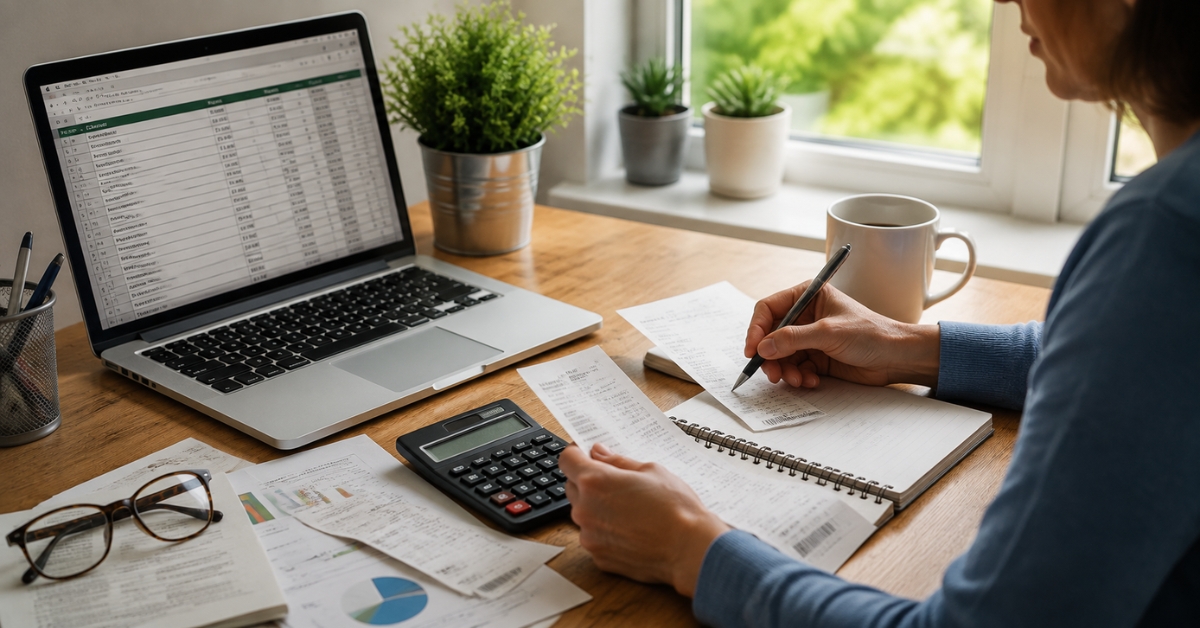
Good records make claiming expenses straightforward. Keep receipts, invoices and bank statements for all business costs for at least 5 years after the tax year (for rental income, HMRC explicitly warns penalties if records aren’t kept). For vehicle use, maintain a mileage log of business vs personal miles. When filling out your Self Assessment, you’ll enter the total allowable expenses for the year on the self-employment section (or property section for landlords) of the tax return. If your turnover is below HMRC’s threshold (£90,000 for 2025/26), you can simply report the total figure. Otherwise, group them into categories as requested by the form. You don’t send proofs to HMRC, but you must retain them in case of an enquiry.
One more tip: if your business expenses are relatively low (under £1,000 a year), you might choose the £1,000 trading allowance instead of itemising costs. It’s a flat deduction for small-scale traders, but you can’t use it if your actual expenses exceed £1,000. Compare both methods – keeping good records will make this easy to do.
Conclusion
Claiming all the legitimate expenses you’re entitled to on your Self Assessment return can make a big difference to your tax bill. By understanding the rules and keeping accurate records, you ensure you’re not overpaying tax and avoid HMRC inquiries. In summary: focus on costs wholly for your business (office supplies, travel, equipment, insurance, etc.), keep proof of each expense, and report them correctly on your return. Tax rules and processes (like Making Tax Digital) are changing, but the fundamentals remain. When in doubt, seek professional advice or HMRC guidance to stay compliant. The result will be greater confidence at filing time and more cash retained in your business.
FAQs
Can I claim my daily commute to work?
No. Travel from home to your regular workplace is classed as commuting and isn’t allowable. Only trips made wholly for business purposes (e.g. meeting clients or business deliveries) count.
What records should I keep for expenses?
Keep all receipts, invoices and bank statements for business costs. Also log business mileage if you use a car. HMRC requires you to retain these records for at least 5 years after the relevant tax year.
How do I claim home office expenses?
If you work from home, you can claim a proportion of your home bills (rent, electricity, internet) based on the office space/time used for work. HMRC offers a simplified flat-rate method (based on hours worked) or you can apportion actual costs. Use whichever gives the best claim.
What is the £1,000 trading allowance?
It’s a flat relief for small businesses and sole traders. If your total allowable expenses are under £1,000, you can simply deduct £1,000 from your income instead of itemising costs. You can’t use both the allowance and actual expenses; choose whichever gives a lower tax.
Can I claim mortgage payments on my rental property?
Only the interest part of mortgage payments for a rental property can be claimed against rental income. The capital (repayment) portion is not an allowable expense.