


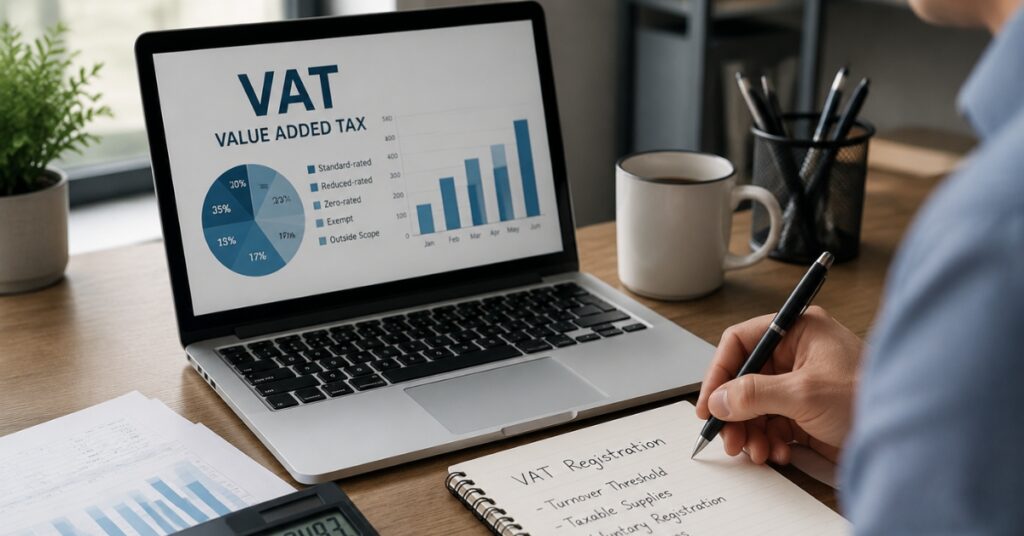
For many UK businesses especially fast-growing startups or sole traders understanding VAT registration rules is crucial. Crossing the VAT threshold unknowingly can trigger unexpected tax bills and penalties. In fact, experts warn that “VAT mistakes can lead to fines, interest charges and HMRC enquiries. This guide explains exactly when you must register for VAT, how to calculate your taxable turnover, and what to watch out for. We’ll also cover the benefits and drawbacks of registering early, and the steps to take once you hit the £90,000 threshold.
Mandatory VAT Registration Triggers
UK law requires most businesses to register for VAT once they hit specific turnover milestones. The key triggers are:
- Exceeding the threshold: Your business’s total taxable turnover in the last 12 months goes over £90,000. Turnover is calculated on a rolling 12-month basis, not aligned to the tax year.
- Anticipating the threshold: You reasonably expect to exceed £90,000 in taxable turnover within the next 30 days. In other words, if a new contract or surge in sales will push you over, start the registration process immediately.
- Non-UK sellers: Even if turnover is below £90,000, any business based outside the UK that supplies goods or services to UK customers must register as soon as it makes a taxable sale in the UK.
If any of the above apply, you must register for VAT with HMRC. Once registered, you must charge VAT on your sales and can reclaim VAT on your business purchases.
What counts as taxable turnover? Only VATable sales count toward the threshold. This includes all goods and services you sell at the standard 20% rate, the reduced 5% rate, or even zero rate. You should also include special cases in your turnover:
- Normal sales: All taxable goods and services (standard, reduced or zero-rated) you sell are counted.
- Loaned or exchanged goods: Any business assets you loan to or give to customers, as well as barter or part-exchange transactions, count in your turnover.
- Imported and construction services: Certain services you receive from abroad (reverse-charge services) and large construction projects (e.g. self-built premises over £100,000) must be included.
You do not include VAT-exempt or out-of-scope supplies in this calculation. For example, some financial services, insurance, education, and charitable fundraising are VAT-exempt. If your business only makes exempt supplies, you are not required to register even if your gross sales exceed £90k.
Calculating Your Turnover
Carefully monitoring your turnover is key. Each month, add up the value of all taxable sales from the past 12 months. This rolling sum determines your position against the threshold. In practice, many businesses keep running 12‑month totals using bookkeeping software or spreadsheets, updating them as each sale occurs.
For example, a retailer would tally the total sales (excluding VAT) of all products sold in the previous 12 months. A consultant would add up all fees for taxable services over the same period. Remember to exclude any fully VAT‑exempt income (such as insurance commission, if that’s your only exempt sales).
If your latest 12-month total exceeds £90,000, you’ve hit the mandatory trigger. If it stays below £90,000, registration is optional (see next section). Once you do cross the threshold, timing is important:
- Within 30 days: You must register within 30 days after the month you exceeded £90k. HMRC counts from the end of that month.
- Anticipation rule: If you realize you will exceed £90k within 30 days, register immediately (by the end of that 30-day period). Your VAT registration date is then backdated to when you first exceeded, or even when you realized you would exceed.
Examples: If on 15 July your rolling 12-month turnover just reached £100,000, that is the first day above £90k. You must register by 30 August, making 1 September your effective VAT date. If on 1 May you win a £100,000 contract that will be billed at month-end, you know you’ll hit the threshold. In that case, you must register by 30 May, and the effective VAT date will be 1 May (the date you realized you’d cross the line).
Once you register, HMRC will sign you up for Making Tax Digital (MTD) for VAT, unless you qualify for an exemption. This means you must keep digital VAT records and submit your returns using compatible software.
Voluntary VAT Registration: Pros and Cons
If your turnover is below £90,000, registration is optional – you may choose to register early. Many small businesses find voluntary registration advantageous, but there are trade-offs.
Benefits of voluntary registration include:
- Claim input VAT: You can reclaim the VAT on purchases and expenses that relate to your business. This is especially helpful if you buy significant equipment or stock. Importantly, you can even reclaim VAT on qualifying purchases made before you registered (within HMRC’s time limits).
- Enhanced credibility: Being VAT-registered can make a small business appear larger and more established. VAT-registered customers (businesses) can also reclaim the VAT you charge them, so your prices remain competitive.
- Cashflow refunds: If your VAT costs (on purchases) exceed the VAT you charge, you will receive refunds from HMRC rather than making payments. For example, startups that invest in equipment or build up stock often end up in a VAT-recovery position.
Drawbacks and extra work:
- Administrative burden: VAT registration means additional bookkeeping and regular returns, which can be time-consuming. Many businesses need software or professional help to manage the extra records.
- Higher prices for consumers: If your end-customers are not VAT-registered consumers, adding 20% VAT to your sales can make your prices appear much higher. In such markets, this might put you at a disadvantage.
In short, voluntary registration makes most sense if your customers are other VAT-registered businesses, or if you have big expenses to recover. You’ll want to weigh the cashflow and cost benefits against the added complexity.
Deadlines, Compliance and Penalties
Once you determine that you need to register, act promptly. Register online on HMRC’s website within the 30-day deadline. Your effective registration date will be either the date you crossed the threshold or the date you knew you would. You cannot legally charge VAT on sales before your official registration date but you still owe VAT from that date onward.
Failing to register on time has serious consequences. HMRC will backdate your VAT liability to when you should have registered, even if you only notify them later. You will owe all the VAT that should have been charged on your invoices from that date, which can hit cashflow hard. On top of that, late-registration penalties can apply. The penalty is calculated as a percentage of the VAT owed, increasing the longer you delay. In HMRC’s regime, the penalty ranges from 5% for delays under 9 months up to 15% for being over 18 months late. There’s also a minimum £50 penalty.
In practice, that means a sizeable sum if you’ve been over the threshold unknowingly for a year. HMRC may also charge interest on any unpaid VAT. In short, avoid procrastination: if your turnover is approaching £90k, track it carefully and prepare to register in time. Many accountants recommend setting up alerts or re-evaluating your figures each month once you’re above about £70k.
Key steps when crossing the threshold:
- Monitor monthly: Keep a running 12-month turnover total, so you spot threshold breaches early.
- Register promptly: If you exceed £90k in the last 12 months, notify HMRC within 30 days of that month ending. If you expect to exceed soon, register before the 30 days expire.
- Prepare for VAT: Once registered, start charging VAT at the appropriate rates on all taxable sales, issue VAT invoices with your registration number, and keep digital records under MTD.

Real-World Scenarios
Here are a few quick examples to illustrate these rules:
- Growing Consultancy: Alice runs a business consulting firm. Over the past year she’s billed £85,000. In February she signed a £10,000 contract. This pushes her rolling total to £95,000. Alice must register by the end of March (30 days after February’s end). From the date she surpassed £90k (in February), she’ll need to account for VAT on her invoices.
- E-commerce Seller: Bob sells products online. He anticipates holiday sales will boost his turnover from £80k to £95k. He registered voluntarily in November, before hitting £90k. He can now reclaim VAT on his inventory purchases and appears larger to other businesses buying from him.
- Foreign Freelancer: Clara lives in France but provides digital services to clients in the UK. Although her total sales are only £20k, she must register immediately because she’s non-UK and making UK supplies.
In each case, proactive planning is key. Missing the trigger date can leave you owing VAT on past sales and facing penalties.
Conclusion
Determining when to register for VAT is a critical compliance step for UK businesses. The current threshold of £90,000 (in any rolling 12 months) is a hard limit – exceeding it (or expecting to) legally requires registration. Failing to register on time means backdated VAT bills and potential fines. On the other hand, voluntary registration can be a useful tool for the right businesses, allowing them to reclaim VAT and improve their market position.
Keep a close eye on your turnover as you grow. Use reliable accounting systems or professional advice to ensure you spot the threshold in time. With deadlines and Making Tax Digital rules in play, preparation helps avoid surprises. In summary: know your numbers, register when required, and stay compliant. By doing so, you’ll protect your business from penalties and possibly unlock cashflow benefits.
FAQs
When does my business need to register for VAT?
You must register if your taxable turnover in the last 12 months exceeds £90,000, or if you expect it to exceed £90,000 in the next 30 days.
Can I register for VAT before reaching £90,000 turnover?
Yes. Any business can choose to register voluntarily even if below the threshold. This lets you reclaim VAT on your purchases and may improve your professional image.
How do I calculate VAT taxable turnover?
Include all sales of goods and services that are not VAT-exempt. That means standard-rated, reduced-rated, and zero-rated sales count towards the threshold. Exempt supplies (like certain financial or educational services) are not counted.
What happens if I delay registering after crossing the threshold?
You will owe all the VAT from the date you should have registered. HMRC may also charge penalties and interest. Penalties can be up to 15% of the VAT due for very late registration.
Do I need to register if I only sell VAT-exempt goods or services?
No. If all your sales are VAT-exempt or out-of-scope, the VAT registration threshold does not apply. Only VAT-taxable turnover counts towards the £90,000 limit.