


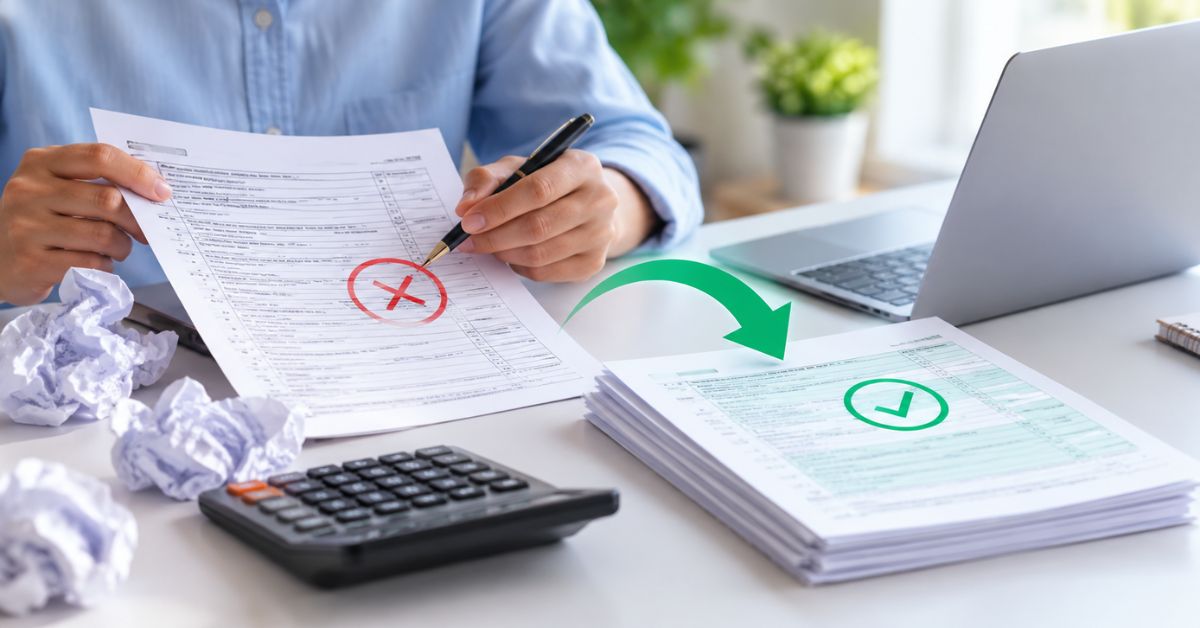
Finding a mistake after submitting your tax return can be unsettling, especially if you have already paid the bill. The next step is to establish exactly what is wrong, check the correction deadline and work out whether the change increases or reduces your tax.
This guide focuses on UK Self Assessment returns. Company Tax Returns and VAT returns have separate correction procedures, so first confirm which return contains the error.
Whether you missed income, duplicated an expense or entered the wrong figure, a clear record of the mistake will help you put it right.
Check the Error Against Your Original Records
Start with the return actually submitted to HMRC, rather than an earlier draft. Compare the relevant entry with the document supporting it.
Depending on the mistake, this could mean checking:
- Employment income and tax deducted against your P60 or P45.
- Business income against invoices, bank receipts and accounting records.
- Expenses against receipts and the business purpose of each payment.
- Savings interest against annual bank statements.
- Pension contributions against provider statements.
Write down the original figure, the corrected figure and the reason for the difference. Record when you discovered the problem.
Check whether the error affects other entries. An omitted business receipt may change taxable profit, while an incorrect pension contribution could affect the relief available. If the same calculation was used in earlier years, review those too.
Avoid replacing an uncertain number with another estimate simply to finish the correction quickly.
Establish Your Amendment Deadline
You can normally amend a Self Assessment return within 12 months of its statutory filing deadline. This is generally measured from the relevant 31 January deadline, rather than the day you submitted the return.
For example:
| Tax year | Usual filing deadline | Usual amendment deadline |
| 2024/25 | 31 January 2026 | 31 January 2027 |
| 2025/26 | 31 January 2027 | 31 January 2028 |
Filing early does not normally bring the amendment deadline forward. Filing late does not automatically give you a fresh 12 months to make changes.
Different dates can apply where HMRC issued a late notice to file. Check the deadline applying to your circumstances before relying on these examples.
Correct the Return Through the Appropriate Route
The process depends on how you originally filed.
Online through HMRC: Wait at least 72 hours after submission. Open your Self Assessment account, find “Tax return options”, select the relevant year, make the changes and submit the amended return.
On paper: Send the corrected pages to the address on your Self Assessment paperwork. Mark each page “amendment” and include your name and Unique Taxpayer Reference.
Through commercial software: Check how the software handles amendments. Contact HMRC if it cannot submit the correction.
Keep the amended return and submission confirmation. Saving changes in a draft or correcting your bookkeeping does not, by itself, establish that HMRC has received the amendment.
If an accountant filed the original return, send them the supporting documents and agree who will submit the correction.
Take the Right Approach After the Deadline
Missing the normal amendment deadline does not mean you should leave an error unresolved. The next step depends on its effect.
If you have underpaid tax
Notify HMRC so it can take the appropriate corrective action. An expired amendment window does not remove the need to report an underpayment.
Write to HMRC identifying the tax year, why too little tax was paid and your calculation of the underpayment. Sign the letter and retain a copy.
For errors spanning several years, obtain advice on the appropriate disclosure route before submitting disconnected corrections.
If you have overpaid tax
You may qualify for overpayment relief. The normal time limit is four years after the end of the relevant tax year. For 2022/23, that generally means claiming by 5 April 2027.
This is a separate claim with conditions and exclusions; it is not an automatic extension of every tax relief deadline.
The written claim must identify the tax year, explain the overpayment, state the amount and confirm whether you previously appealed concerning it. It must expressly claim overpayment relief and include your signed declaration that the information is correct and complete to the best of your information and belief. Your tax agent cannot sign that declaration for you. Keep evidence supporting the tax paid.
Review the Revised Bill and Payment Position
After an amendment, check both the revised tax calculation and your account statement. The updated bill should show any additional payment deadline and changes to payments on account. If the correction reduces your liability, check whether a repayment needs to be requested.
An amendment can create a distinction between the payment deadline and the interest calculation. Additional tax is generally payable by the later of the normal due date or 30 days after notice of the amendment. However, interest normally runs from the original relevant payment dates.
Do not assume that submitting a correction settles the financial side. Match any payment against the updated account and keep its reference.
Understand When a Penalty May Apply
A correction does not automatically mean an inaccuracy penalty. HMRC considers whether you took reasonable care and whether the error was careless or deliberate.
Where reasonable care was taken, an inaccuracy penalty should not arise simply because the return was wrong. Where a penalty is due, the circumstances of disclosure and the help you provide can affect its amount. Coming forward voluntarily can matter, but it does not guarantee that penalties or interest disappear.
Keep a factual explanation of how the mistake happened, the checks originally performed and the steps taken after discovering it. Avoid guessing about the cause.
Fix the Process Behind the Mistake
Before closing the matter, identify what allowed the error through. Was a bank account missed? Were personal and business expenses mixed together? Did the final return use an outdated spreadsheet?
Choose a practical safeguard that addresses that cause. This might be a monthly reconciliation, a checklist of income sources or a review of supporting documents before approval.
For recurring record problems, Interface Accountants’ bookkeeping services can support more organised accounts. Its tax return services include preparation, a second review and client approval before submission.
Frequently Asked Questions
1. Can I correct a return after paying the tax?
Yes. Paying the original bill does not prevent a correction. The applicable amendment deadline or later claim procedure still matters.
2. Should I put missing income on next year’s return?
Do not move income into another year simply to compensate for an omission. Establish which year it belongs to and correct that year’s position.
3. Can my accountant deal with the correction?
An authorised accountant can generally assist. You should review the revised figures, provide supporting records and personally sign any overpayment relief declaration required.
4. What if HMRC has already opened an enquiry?
Tell the officer handling it. You can still amend within the normal time limit, but the amendment does not take effect until the enquiry is completed.
5. Should I ignore an error that does not change the tax?
No. Check whether the information still needs correcting. Entries can affect losses, reliefs or later calculations even when the immediate bill stays unchanged.
Put the Correction on a Clear Footing
A sound correction starts with verified figures and the right procedure. Establish the deadline, explain the change and follow through on the revised payment or repayment position.
Then address the cause before your next return. A better review process makes future filings easier to support and reduces the chance of discovering the same problem again.