

Keeping financial records up-to-date is critical for any small business. With over 5.4 million UK small firms operating today, failing to update your books regularly can quickly lead to cash flow problems, compliance headaches, and missed opportunities. In reality, bookkeeping is not something you can push off until year-end. As one UK accounting guide explains, “the frequency with which accounts are updated has a direct impact on cash flow control, tax compliance, and overall financial confidence”. In other words, timely bookkeeping gives you clarity and confidence, whereas delays create stress and confusion. This article explores why regular updates matter and how often you should realistically log transactions, reconcile accounts, and review financial reports.
Why Timely Bookkeeping Updates Matter
Regularly updating your books means you always know exactly how much money is coming in and going out. That visibility is crucial for managing cash flow and planning ahead. When records stay current, business owners can see income, expenses and unpaid invoices in real time, rather than guessing from outdated information. Having accurate, up-to-date books reduces errors and surprises – for example, you’ll spot a missing invoice or a duplicate charge right away instead of finding it months later. As one expert note puts it, “keeping books up to date reduces the risk of errors and ensures that financial records reflect reality rather than assumptions”. In practice, this means you can make better decisions (like when to hire staff or purchase inventory) based on reliable data, not on stale numbers.
Not updating your books regularly can have real consequences:
- Missed payments and penalties: If you fall months behind, it’s easy to overlook bills or neglect VAT payments. UK tax authorities are strict about record-keeping, and “incorrect record-keeping could lead to HMRC penalties”. What’s more, scrambling to piece together a year’s worth of invoices under deadline pressure often leads to mistakes.
- Hidden cash flow problems: When transactions sit unrecorded, your cash position becomes a mystery. You might think you’re profitable, then discover late that bills have piled up. One UK accountant warns that infrequent updates “increase the risk of missing transactions, incorrect expense allocation, and delayed recognition of cash flow issues”.
- Higher costs: By the time you catch up, you’ll pay more either in extra accounting fees or lost deductions. Bookkeeping backlogs usually require costly catch-up work from professionals, and missed receipts mean you might pay more tax than necessary.
In short, keeping your books current streamlines tax time and business planning. It “makes tax preparation and bookkeeping far more manageable” and helps avoid last-minute panic. Modern advice even stresses that “what gets measured gets managed” – so treating bookkeeping as a routine part of your work is the key to staying in control.
Choosing the Right Update Frequency
There is no one-size-fits-all answer. The ideal bookkeeping frequency depends on how much activity your business handles each day or week. For a sole trader with only a few transactions per month, a monthly update might suffice. But as your sales grow or you hire employees, you’ll likely need more frequent checks.
- Small or low-volume businesses (Monthly): If you only have a handful of invoices and expenses in a month, you may get away with updating books once a month. For example, a freelance consultant with two or three clients could spend one day at the end of the month reconciling bank statements, recording expenses, and entering receipts. U&W Accountancy notes that sole traders with “a small number of invoices, expenses and bank movements each month” can “set aside time at month-end” to reconcile their accounts. This approach keeps records tidy without overwhelming you with daily tasks.
- Growing or medium-size businesses (Weekly): When your transaction volume increases, weekly bookkeeping is usually wiser. Weekly updates spread the workload evenly and catch issues early. For instance, a small retailer or café owner who takes dozens of payments a week should reconcile weekly to keep on top of cash and bank balances. In fact, weekly bookkeeping “suits most small businesses in the UK” because it keeps records up to date and prevents a backlog. Royston Parkin Accountants similarly advise that many growing firms use weekly bookkeeping to stay on top of cash flow, customer payments and supplier bills.
- High-volume or fast-moving businesses (Daily): Some businesses have so many transactions that even weekly is too slow. High-volume retailers, restaurants, or online stores often update daily. For example, e-commerce sellers and hospitality businesses may log sales and expenses at the end of each day. According to UK guidance, busy businesses with many daily transactions (like in retail, hospitality or e-commerce) “need daily or near-daily bookkeeping”. Daily checks mean no sales slip through the cracks and bank feeds can be reconciled immediately. In such cases, cloud accounting tools can automate much of this work – but the key is that updates happen every day so that nothing important is missed.
Deciding where you fit on this spectrum depends on factors like transaction volume, VAT obligations, and cash flow needs. Even if you start with monthly updates, be prepared to move to weekly (or daily) as your turnover grows. Importantly, quarterly bookkeeping is rarely enough for a growing business: updating only every three months often means you’re working with weeks-old data and “could miss cash shortfalls until it’s too late”. In summary, start with at least monthly updates, and increase frequency as needed. Consistency is the goal – a regular routine you can stick to will keep your business in good shape.
Key Bookkeeping Tasks by Frequency
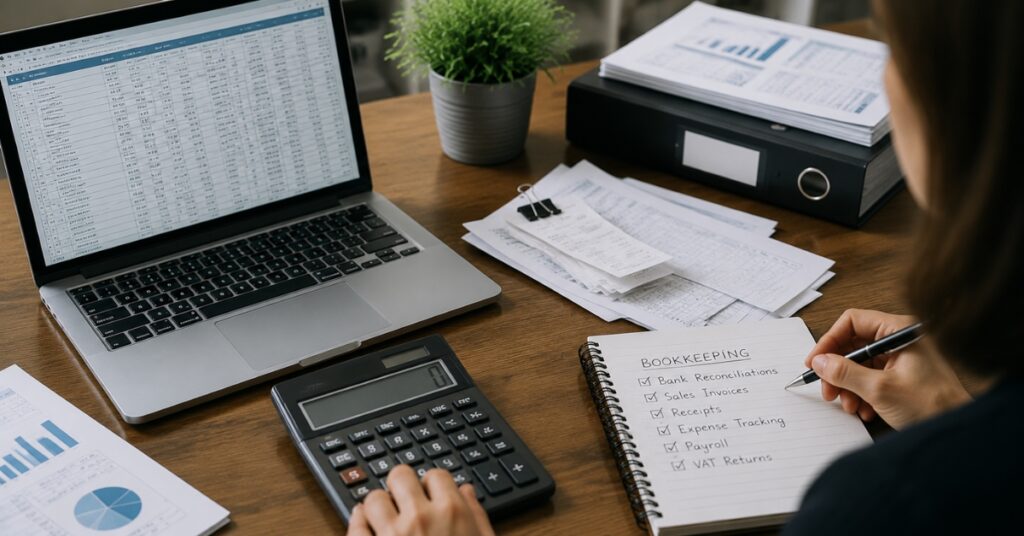
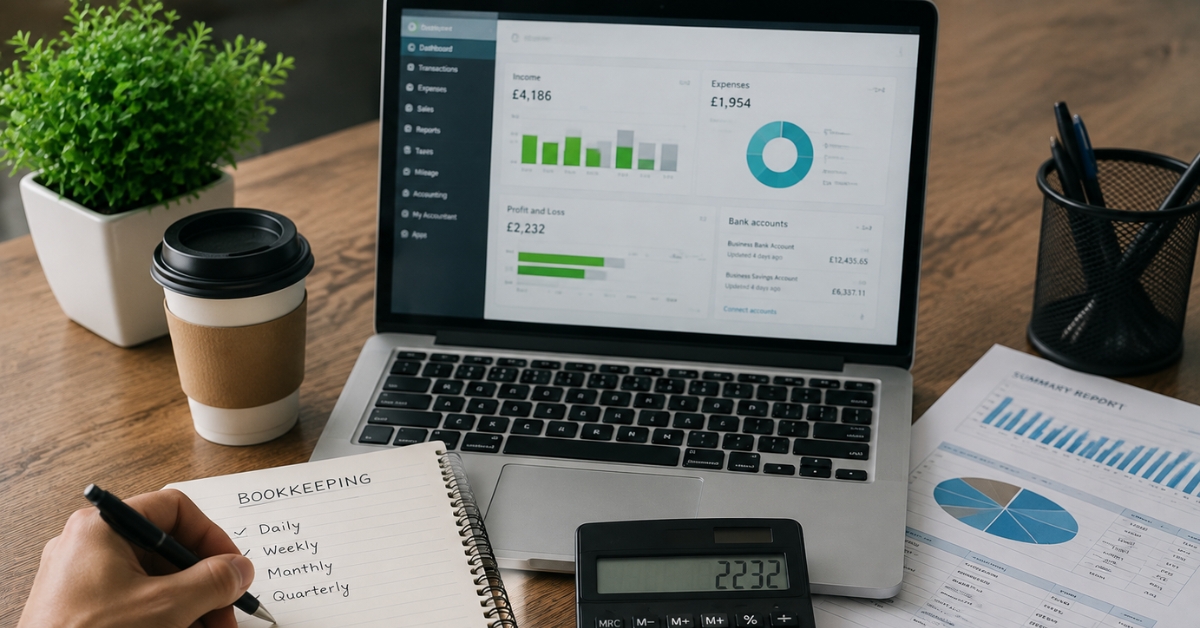
Regardless of your chosen schedule, certain bookkeeping tasks should happen regularly. Breaking them into daily, weekly and monthly routines makes the process manageable. Below is a practical checklist:
- Daily: Record every sale, payment or expense on the same day. This means issuing invoices, noting cash sales, or logging costs as they occur. Recording daily prevents forgetting receipts and keeps your books accurate.
- Weekly: Reconcile your bank and credit card statements. Match each transaction on your bank feed with an entry in your books to catch any mistakes early. Also, chase any outstanding invoices each week so you keep cash coming in. Regular weekly check-ins help spot errors before they pile up.
- Monthly: Review your profit & loss statement and VAT reports. At month-end, check that your books balance. Analyze your income and expenses, and watch cash flow trends to spot any issues. This also includes preparing figures needed for VAT returns (even if you file quarterly). Monthly reviews give you a clear view of performance and let you plan the next month with confidence.
- Monthly minimum legal tasks: At a bare minimum, do these each month to stay compliant: reconcile your bank accounts, ensure every expense (receipts, subscriptions, mileage, etc.) is recorded, chase any overdue payments, review your cash position, and file receipts or paperwork in order. These steps ensure your financial records match reality and keep you aligned with HMRC’s requirements for bookkeeping.
Setting up a routine and using the right tools can make all this work smoother. Many businesses now rely on cloud accounting software (like Xero or QuickBooks) that link directly to bank feeds. Automated feeds and matching can greatly reduce manual entry but you still need to review and reconcile regularly. By systematically handling tasks (daily, weekly, monthly), you turn bookkeeping from a dreaded chore into a set of manageable routines.
Leveraging Digital Tools and Staying Compliant
Modern bookkeeping software is a game-changer. Cloud platforms can import bank transactions instantly, categorize expenses, and generate financial reports on demand. This automation saves time and keeps data accurate. For example, using cloud accounting means you can reconcile transactions as they happen and view your accounts on any device – ensuring you’re never months behind. According to U&W, switching from manual spreadsheets to software “can make the process faster, more consistent and easier to share with your accountant”.
Technology also helps meet regulatory requirements. In the UK, new HMRC rules (Making Tax Digital) are expanding: from April 2026, many small businesses will have to keep digital records and submit quarterly updates to HMRC. In practice, this means you’ll need to maintain current books throughout the year to file those updates. By already using digital software and staying up-to-date weekly or monthly, you’ll be prepared for these obligations. As one accounting expert notes, HMRC’s upcoming digital mandates “demand up-to-date bookkeeping for compliance”. In summary, cloud tools not only simplify bookkeeping now, but also ensure you can meet future compliance requirements easily.
Practical Example: From Quarter-End to Weekly Books
Consider a concrete example. A small restaurant in London used to update its books only once every quarter (to line up with VAT returns). This means the owner was working with very old data, and by the time they spotted a problem like a rising ingredient cost or a lost inventory they had already lost weeks of insight. As it turned out, when they started using weekly bookkeeping, everything changed for the better”. Weekly updates let them monitor expenses and stock levels in real time, detect and manage losses quickly, and follow up on unpaid supplier bills without delay. In this case, moving from quarterly to weekly updates helped the business regain control of its cash flow and profitability.
In contrast, imagine a freelance web developer with only a few client invoices per month. They might find that a quick weekend session at month-end to enter all work completed and expenses (then finalize their Self-Assessment data) is sufficient. Each business is different, but the key lesson is clear: pick a schedule that keeps you consistently informed, and stick with it.
Conclusion
There’s no single rule for every business, but one principle is universal: consistency over guesswork. Whether you log entries daily, weekly, or monthly, the priority is to establish a habit so your records never get too far behind. Most small businesses find that weekly or monthly updates strike the right balance between workload and insight. By updating regularly, you keep your accounts accurate, make tax time less painful, and gain a clear picture of your finances at all times.
Looking ahead, these practices are only becoming more important. The UK’s move toward fully digital tax reporting means small businesses will soon need up-to-date books by law. In this environment, regular bookkeeping is not just best practice – it’s essential. In short, treat your bookkeeping as an ongoing business tool, not a once-a-year chore. That way, your finances stay on track now and you’ll be ready for whatever compliance or growth opportunities the future brings.
FAQs
How often should I update my small business books?
At a minimum, update them monthly. Ideally, aim for weekly if you have steady sales or expenses. Businesses with very high transaction volumes (like retail or restaurants) may update daily. The right frequency depends on your transaction volume, but consistency is key.
Is quarterly bookkeeping enough?
Quarterly updates are generally not recommended for growing businesses. Updating only four times a year means working with old data and missing early warning signs. Most experts advise updating at least monthly so you stay on top of cash flow and tax obligations.
What should I do each month to keep records compliant?
Each month you should reconcile your bank accounts, record all expenses and income (including invoices and receipts), chase any overdue payments, and file your paperwork systematically. These steps ensure your records match your actual transactions and meet HMRC requirements.
What happens if I fall behind on bookkeeping?
Falling behind can lead to missed bills or taxes, errors in your accounts, and a stressful rush to catch up. It can also increase your accounting costs and risk HMRC penalties. In short, you lose visibility of your business’s true performance and invite unnecessary headaches.
How will Making Tax Digital affect my bookkeeping?
From April 2026, many UK businesses above a certain turnover must keep digital records and submit quarterly updates to HMRC under Making Tax Digital. In practice, this means you’ll need to update your books regularly (e.g. weekly or monthly) so that the required digital submissions are ready when due.