



Running an e-commerce business in the UK can look simple from the outside: list products, take orders, ship items, and receive payouts. In reality, the accounting behind an online store is often more complicated than traditional retail. A seller may receive income from Shopify, Amazon, eBay, Etsy, TikTok Shop, PayPal, Stripe, Klarna and bank transfers each with different fees, payout timings, refunds, VAT treatment and reporting formats.
This matters because small accounting errors can quickly distort profit. A seller might think they made £10,000 in sales, but after marketplace fees, payment processing charges, refunds, advertising spend, shipping costs, VAT and stock costs, the real profit could be much lower. With online sales still representing a major part of UK retail ONS data shows internet sales made up 27.9% of total retail sales in March 2026, with internet retail sales across all retailing at £2.618 billion for that month e-commerce accounting is no longer a side issue for online sellers. It is central to pricing, tax planning and business survival.
Why E-Commerce Accounting Is Different from Standard Bookkeeping
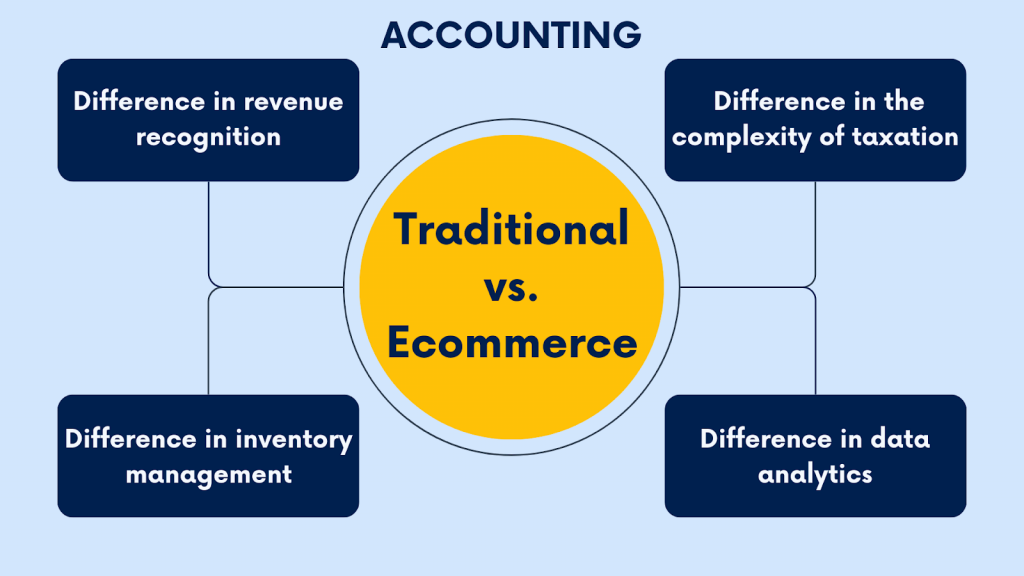
E-commerce accounting is not just recording money in and money out. Online sellers deal with fragmented sales data, delayed payouts, platform fees, stock movements, returns, international suppliers and sometimes complex VAT rules.
A physical shop usually has one till, one card processor and one bank account. An online seller may have five sales channels and three payment gateways. The amount deposited into the bank is rarely the same as the customer’s order value because platforms deduct selling fees, advertising charges, refunds or subscription costs before paying out.
For example, an Amazon seller may sell an item for £40, but the bank receipt might only show £29.50 after referral fees, fulfilment charges and promotional deductions. If the seller records only £29.50 as sales income, their turnover, VAT position and profit reports will all be wrong. Good e-commerce accounting separates the gross sale, fees, VAT, refunds and net payout.
Start with the Right Business Structure
Before building an accounting system, UK sellers need to understand how their business is legally structured. Most e-commerce businesses operate as either sole traders or limited companies.
Sole Trader E-Commerce Sellers
A sole trader structure is simple to start, but the owner and business are legally the same. Profits are reported through Self Assessment, and Income Tax and National Insurance are calculated personally. Sole traders must keep records of business income and expenses for their tax return, and HMRC requires self-employed records to be kept for at least five years after the 31 January submission deadline for the relevant tax year.
This can work well for early-stage sellers, but once profits grow, VAT exposure increases or stock investment becomes significant, many sellers review whether a limited company would be more suitable.
Limited Company E-Commerce Sellers
A limited company is separate from its owners. It files company accounts and a Corporation Tax return. For 2026, UK Corporation Tax remains tiered: companies with profits of £50,000 or less pay the 19% small profits rate, companies with profits above £250,000 pay the 25% main rate and companies between those levels may qualify for marginal relief.
Limited companies also have stricter record-keeping duties. Company accounting records generally need to be kept for six years from the end of the financial year they relate to.
Build an Accounting System Around Sales Channels
The biggest mistake many UK e-commerce sellers make is treating bank deposits as sales. The correct approach is to record sales from platform reports, then reconcile those figures to the payout received.
What Your Accounting System Should Capture
A reliable e-commerce accounting setup should track:
- Gross sales before deductions
- VAT charged, where applicable
- Marketplace and payment processor fees
- Refunds, returns and chargebacks
- Shipping income and shipping costs
- Discounts, vouchers and promotional credits
- Stock purchases and cost of goods sold
- Advertising spend by platform
- Currency conversion gains or losses
This level of detail helps sellers answer practical questions: Which platform is actually profitable? Which product has the strongest margin? Are advertising campaigns generating real profit or just revenue?
Understand VAT Before You Cross the Threshold
VAT is one of the most important areas of e-commerce accounting in the UK. As of 2026, a business must register for VAT if its total taxable turnover for the last 12 months goes over £90,000, or if it expects taxable turnover to exceed £90,000 in the next 30 days. HMRC also allows voluntary VAT registration below the threshold.
For e-commerce sellers, the VAT threshold can arrive faster than expected because turnover is based on taxable sales before expenses, not profit. A seller making £95,000 in annual sales but only £15,000 profit may still need to register.
VAT on Marketplace Sales
VAT can become more complicated when sellers use online marketplaces. HMRC guidance explains that where goods are sold through an online marketplace, the marketplace may be responsible for charging and accounting for VAT in certain cases, especially where goods are outside the UK at the point of sale or involve overseas sellers. For consignments valued at £135 or less, the online marketplace may be responsible for VAT in specific circumstances.
UK-established sellers should not assume the marketplace has handled everything. They still need to understand whether they are responsible for VAT, whether the sale is B2C or B2B, where the goods are located, and whether the customer is in Great Britain, Northern Ireland or overseas.
Making Tax Digital for VAT
All VAT-registered businesses must keep digital VAT records and submit VAT returns using Making Tax Digital-compatible software. HMRC states that MTD for VAT requires VAT-registered businesses to keep records digitally and file returns using software that can communicate with HMRC digitally.
For online sellers, this means spreadsheets alone may not be enough unless they are used with bridging software correctly. A cloud accounting system connected to Shopify, Amazon, eBay, Stripe or PayPal can reduce manual errors, but the setup still needs review because integrations can post sales incorrectly if mapped poorly.
Track Stock Properly, Not Just Purchases
Inventory is where many e-commerce profit reports go wrong. Buying stock is not automatically an expense at the point of purchase. Stock usually becomes a cost of sale when the product is sold.
For example, if a seller buys 1,000 units for £8 each, the £8,000 stock purchase should not immediately reduce profit if most of the products remain unsold. The accounting system should recognise the cost gradually as units are sold. Otherwise, monthly profit reports will look artificially low when stock is purchased and artificially high when the stock later sells.
Include the True Landed Cost
The cost of stock is not limited to the supplier invoice. For imported goods, sellers may also need to factor in freight, customs duty, import VAT handling, inspection fees and packaging. This gives a clearer view of gross margin.
A seller who buys a product for £10 and sells it for £25 may think the gross margin is strong. But if shipping, duty, packaging and fulfilment add another £5 per unit, the real margin is much tighter.
Manage Import VAT and Customs Costs Carefully
Many UK e-commerce sellers source products from overseas suppliers. Import VAT, customs duty and freight charges can have a major cash-flow impact if they are not planned properly.
UK VAT-registered businesses may be able to use postponed VAT accounting, which allows import VAT to be declared and recovered on the VAT return rather than paid upfront at the border. GOV.UK explains that postponed VAT accounting lets businesses declare and recover import VAT on their VAT return, subject to the normal rules.
This is useful, but sellers still need to keep the right evidence, including import entries, duty statements, freight invoices and postponed import VAT statements. Missing documents can make VAT recovery difficult during an HMRC review.
Reconcile Payouts Every Month
Monthly reconciliation is one of the best habits an e-commerce seller can develop. It confirms that the sales data, platform payouts, bank deposits and accounting records all match.
A practical monthly reconciliation should compare:
- Platform sales reports against accounting system sales
- Payout reports against bank receipts
- Refunds and chargebacks against customer service records
- Marketplace fees against expense postings
- VAT reports against sales channel data
- Stock sold against inventory movement
This process helps identify problems early. For example, a Shopify payout may be delayed, a PayPal balance may not have been transferred to the bank, or Amazon may deduct advertising spend from a future payout. Without reconciliation, these items can sit unnoticed for months.
Plan for Tax Before the Deadline Arrives
E-commerce sellers often focus heavily on sales and leave tax planning until the year end. That creates cash-flow pressure, especially when stock purchases, VAT bills and personal tax payments overlap.
Sole Traders and Payments on Account
Self-employed sellers may need to make payments on account towards their next Self Assessment bill. HMRC explains that each payment is normally half of the previous year’s tax bill, with payments due by 31 January and 31 July.
This can surprise growing sellers. A strong first year can create a large January bill because the seller may need to pay the balancing payment for the previous year plus the first payment on account for the next year.
Limited Companies and Corporation Tax
Limited company sellers should monitor Corporation Tax throughout the year, not just after accounts are prepared. Profit can move quickly in e-commerce, especially during seasonal sales periods such as Black Friday, Christmas or January promotions.
Good tax planning allows the business to budget for Corporation Tax, director salaries, dividends, pension contributions, stock investment and VAT payments without weakening working capital.
Prepare for Making Tax Digital for Income Tax
Making Tax Digital is expanding beyond VAT. From 6 April 2026, sole traders and landlords with total annual income from self-employment and property over £50,000 must use MTD for Income Tax. HMRC guidance says they will need compatible software to keep digital records, send quarterly updates and submit their tax return.
The threshold then reduces in later years. HMRC guidance states that those with qualifying income over £30,000 for the 2025 to 2026 tax year will need to use MTD from 6 April 2027, and those over £20,000 for the 2026 to 2027 tax year will need to use it from 6 April 2028.
For e-commerce sole traders, this makes clean digital bookkeeping even more important. Sellers who currently tidy their records once a year will need a more regular process.
Know Which Expenses Are Deductible
E-commerce sellers usually have a wide range of business expenses. The key is to separate genuine business costs from personal spending and keep evidence for each claim.
Common e-commerce expenses include platform fees, payment processing fees, packaging, postage, product photography, software subscriptions, advertising, accountancy fees, warehousing, fulfilment costs, samples, website hosting and business insurance.
The important point is not just whether an expense is allowable, but whether it is recorded in the right category. If advertising, fulfilment and platform charges are all grouped together as “general expenses”, the seller loses useful performance insight.
Use Management Reports to Improve Decisions
Good accounting is not only about compliance. It should help sellers make better decisions. A useful monthly report should show more than total sales.
For e-commerce businesses, management accounts should highlight gross margin, contribution margin after platform fees and advertising, stock levels, best-selling products, slow-moving inventory, customer acquisition cost and cash available after tax provisions.
A seller may discover that one product generates high revenue but poor profit because return rates are high. Another product may sell less frequently but deliver stronger margins and fewer customer service issues. Without product-level reporting, those patterns stay hidden.
Common E-Commerce Accounting Mistakes to Avoid
Many accounting problems start small but become expensive as sales grow.
The most common mistakes include recording net payouts as sales, ignoring marketplace fees, failing to monitor the VAT threshold, treating all stock purchases as immediate expenses, mixing personal and business spending, not reconciling PayPal or Stripe balances, and failing to keep import VAT evidence.
Another mistake is relying fully on automation without checking the output. Accounting integrations are useful, but they are not a substitute for professional review. If VAT codes, fee mappings or sales categories are wrong, the software can repeat the same error every day.
When UK Sellers Should Work with an E-Commerce Accountant
A general accountant may understand tax, but e-commerce sellers often need advice that reflects how online platforms actually work. This is especially true for sellers using Amazon FBA, Shopify, TikTok Shop, Etsy, eBay, international suppliers or multiple payment gateways.
A specialist e-commerce accountant can help with VAT registration, software setup, platform reconciliation, stock accounting, Corporation Tax planning, Self Assessment, payroll, director pay, and cash-flow forecasting. For growing UK sellers, the value is not just filing returns — it is building a system that shows accurate profit before problems become expensive.
Conclusion
E-commerce accounting for UK sellers is about much more than year-end compliance. It connects directly to pricing, stock control, cash flow, VAT, tax planning and long-term growth. As online selling continues to hold a significant share of UK retail, sellers who understand their numbers will be better placed to compete.
The practical approach is clear: record gross sales properly, separate fees and refunds, monitor VAT early, track stock accurately, reconcile payouts every month and use digital software that supports Making Tax Digital. The sellers who build these habits early are less likely to face tax surprises and more likely to make confident decisions as their store grows.
FAQs
Do UK e-commerce sellers need to register for VAT?
Yes, if taxable turnover exceeds £90,000 in a rolling 12-month period, or if the business expects to exceed that amount in the next 30 days.
Should I record marketplace payouts as sales?
No. You should record gross sales separately, then record platform fees, refunds, VAT and other deductions.
Is stock an expense when I buy it?
Usually, stock becomes a cost when it is sold, not simply when purchased. This gives a more accurate profit figure.
Do Shopify and Amazon sellers need accounting software?
It is strongly recommended. VAT-registered sellers must use MTD-compatible software for VAT returns and sole traders may also need digital records under MTD for Income Tax.
Why hire a specialist e-commerce accountant?
A specialist understands marketplace fees, VAT rules, stock accounting, platform integrations and payout reconciliation, which are common problem areas for online sellers.